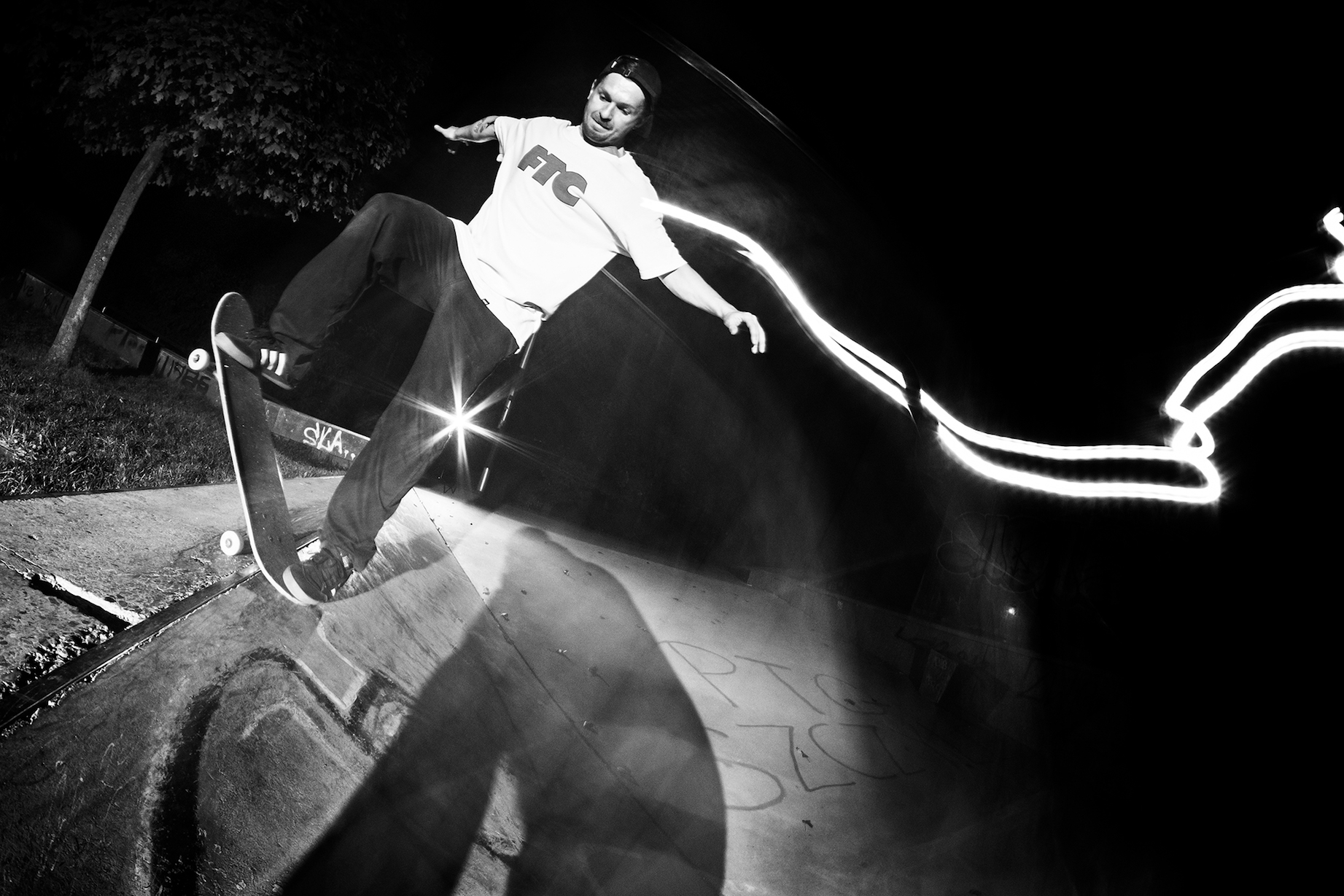
Now- personallly speaking- I don’t know why anyone would volunteer to be a skateboard judge. I appreciate that it is important, but it is also a) thankless and b) exhausting.
One of the great privileges of what I get to do in profiling these wayward souls, however, is to prize the lid off their public job to find the story of the skateboarder behind the role. That is always a treasure trove of lore, and experience, and stories, and roots.
Which brings us to Jakub Michalski. Poland is not without impact on Europe’s skateboarding scene- you may be aware of the Grey Area videos or the name Michal Juras, while older skaters may remember the name Gutek Szymanski or indeed the Etnies European Open held in Krakow 20 years ago.
Jakub is synonymous with the skate scene in his native Katowice, and has a skating life which connects those eras and the skateboarding scene across Poland over decades.
This is the first time a lot of these stories have been told, so let’s crack on and let him fill us in on his skateboarding life, the scene in Poland over time, and why he chose to join the ISJC certification program which this interview shines a light upon.
Read on!
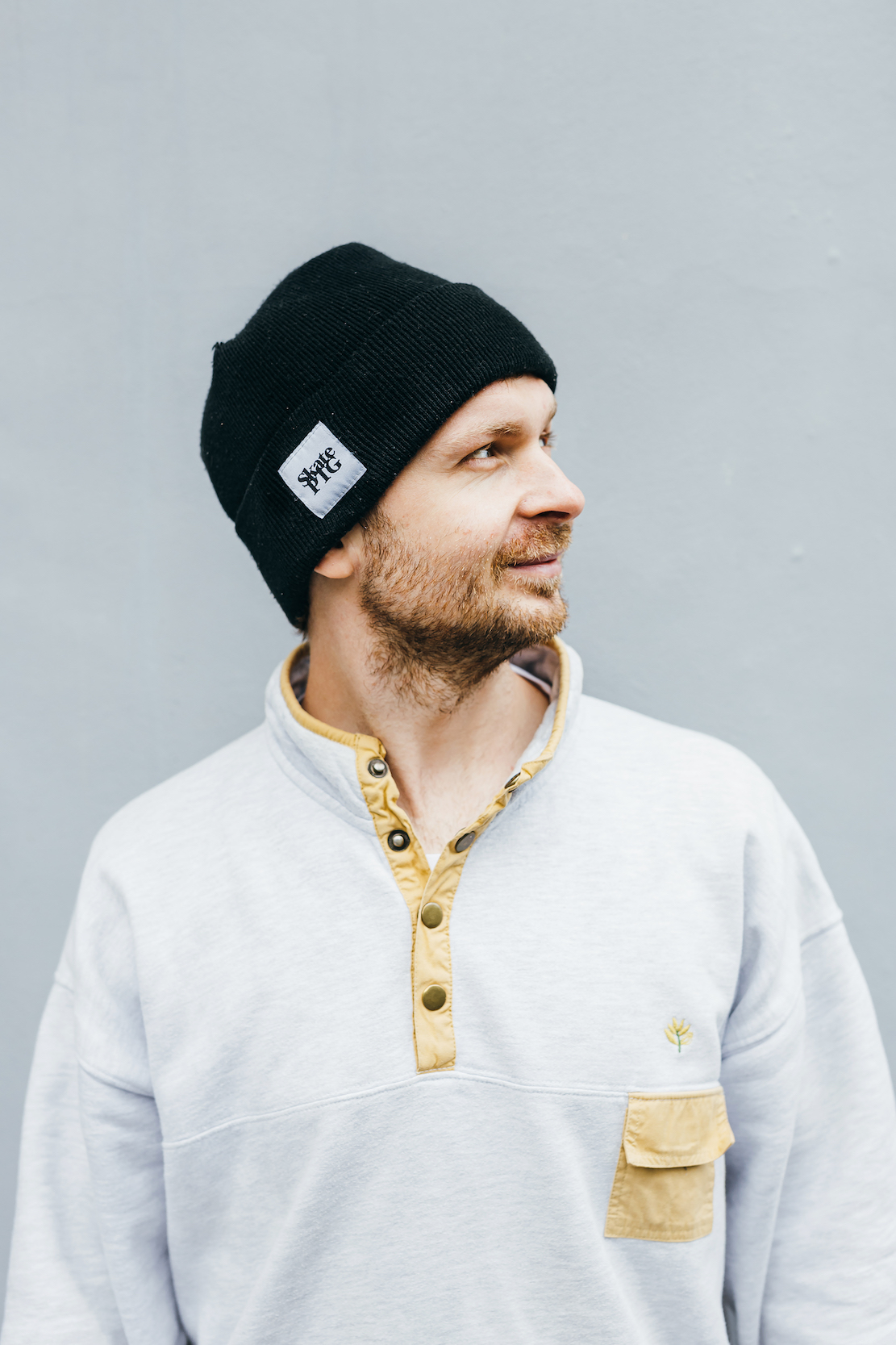
Ph: Krystof Lazik
Hi Jakub, can you tell us who you are and all that good stuff?
Hey! I’m Jakub, born and raised in Katowice. I’ve been skating for about 24 years now, and off the board I’m a husband and a dad to two little girls. I’m involved in the scene in a bunch of ways: I skate, I judge contests, and I also run a skateboarding association Skate PTG that supports and develops the local skate community. Basically, I just try to use my experience to give something back to the scene and help other riders out.
Now, I know you are heavily connected to the Katowice scene, but can we talk about the Polish skate scene more generallly for a second? People may have heard of Gutek Szymanski and Michal Juras or seen the videos of Kuba's Perzyna or Kaczmarczyk in the past- or maybe Weronika Chromańska more recently, but how is the scene at a national level today?
The Polish scene is doing great and keeps growing! It’s way more diverse and professional than it used to be. Of course, people like Gutek, Juras, Kuba Perzyna, and Kuba Kaczmarczyk are total legends, the foundations of Polish skateboarding. They built and documented so much of our history.
These days we’ve got a whole new wave of crazy talented skaters making their mark across Europe and even worldwide. And Weronika Choromańska is a perfect example of how fast the girls’ scene is developing.
It’s also super cool to see older skaters jumping back on their boards and getting involved again. What’s really key now is that there’s a strong base of local scenes, not just in Katowice or Warsaw but all over. There’s energy, potential, and you can really feel that skateboarding in Poland has become more than just a subculture.
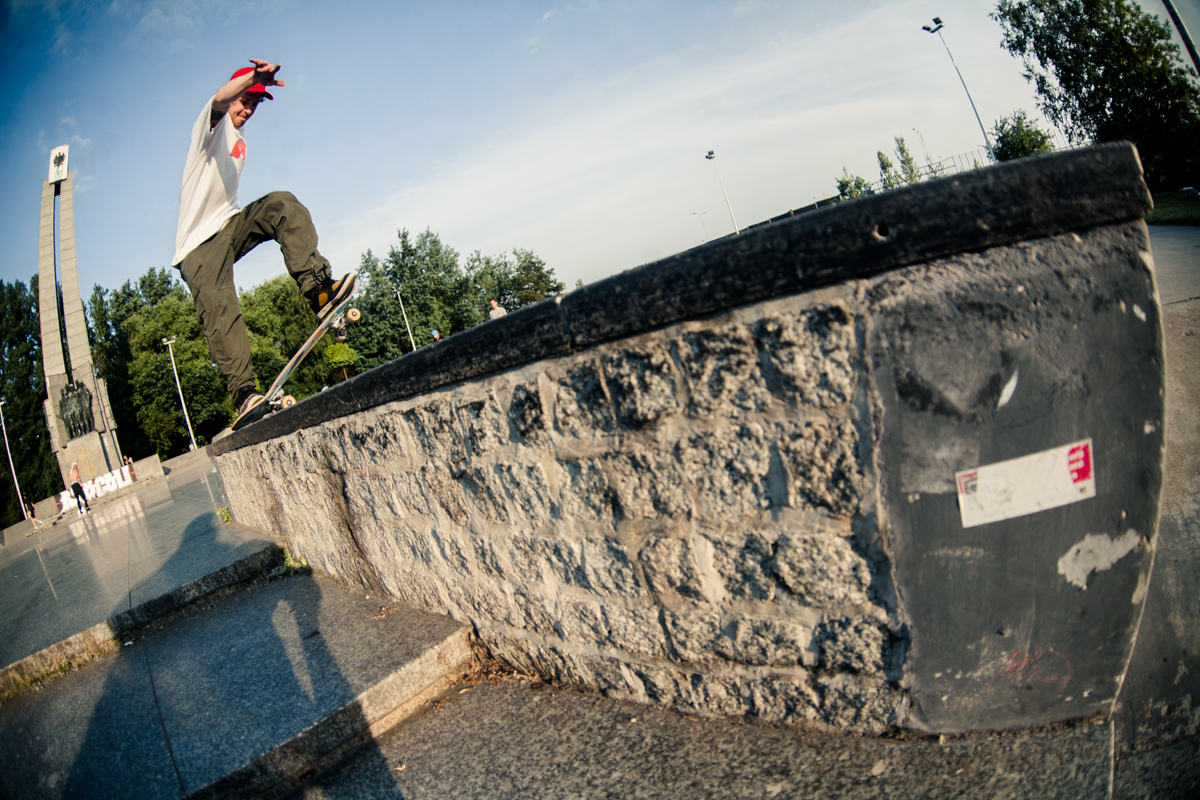
Ph: Andrzej Naras
Can you explain the significance of the PTG spot to us?
PTG, short for Pomnik Trudu Górniczego (Monument to Miner’s Labour) in Katowice, is basically the main skate spot in our city. Since the 90s it’s been the place where people skate, hang out, and form friendships that last a lifetime. It’s a real piece of history and the heart of the Katowice scene.
Originally it was just a big granite square that skaters started adapting in the early 90s, building their own obstacles and creating what became the first big informal skate spot. It quickly turned into a key location on the Polish skate map.
The big turning point came around 2008, when there were plans to demolish it. After strong protests, petitions, and actions from skaters all over Poland, the City of Katowice not only dropped the idea but actually decided to keep PTG and rebuild it. Since 2012 it’s been functioning as a skate plaza.
These days, KorPow skateshop is now also located at PTG, and together we take care of the spot, keep developing it, and organize all kinds of sessions and events, both small and big.
Thanks to that, PTG stays alive and remains a vibrant central meeting point for the whole community.
How did you get involved in the judging side of things?
Honestly, it just happened naturally. I’ve always been super passionate about skateboarding. Ever since I was a kid I was glued to every skate video and contest I could find. I used to watch Tampa Pro, Monster Mastership, Mystic Cup, and Etnies European Open religiously.
After high school I started working at a skateshop called Kosmos, which was the shop in Katowice back then. We organized local events and comps all the time, and I kinda ended up judging them just by being involved.
Over time it became something more serious. I really got into the rules and structure of judging, and once official training programs appeared, I joined right away to sharpen my skills. I worked my way up, judging bigger and bigger events, sometimes as a regular judge and sometimes as head judge. Now I’m stoked to be part of the World Skate judging panel and to keep pushing myself in that direction.
As well as being a judge, you also run a skateboarding association as well- can you tell us about what that entails?
Yeah, that’s a huge part of what I do. Our association Skate PTG focuses on keeping skateboarding culture alive and authentic.
We support the local community by organizing everything from small chill sessions and film screenings to big events that bring people together and show the scene to a wider audience. We also work with cities to improve existing spots and help new ones appear. Plus, we run skate classes for kids, but always with the focus on fun and creativity, not just tricks and technique.
We’re kind of the bridge between the DIY community and the official institutions. Sure, there’s a ton of paperwork and logistics involved, but it’s totally worth it. The satisfaction of helping the scene grow in a healthy, genuine way is massive.
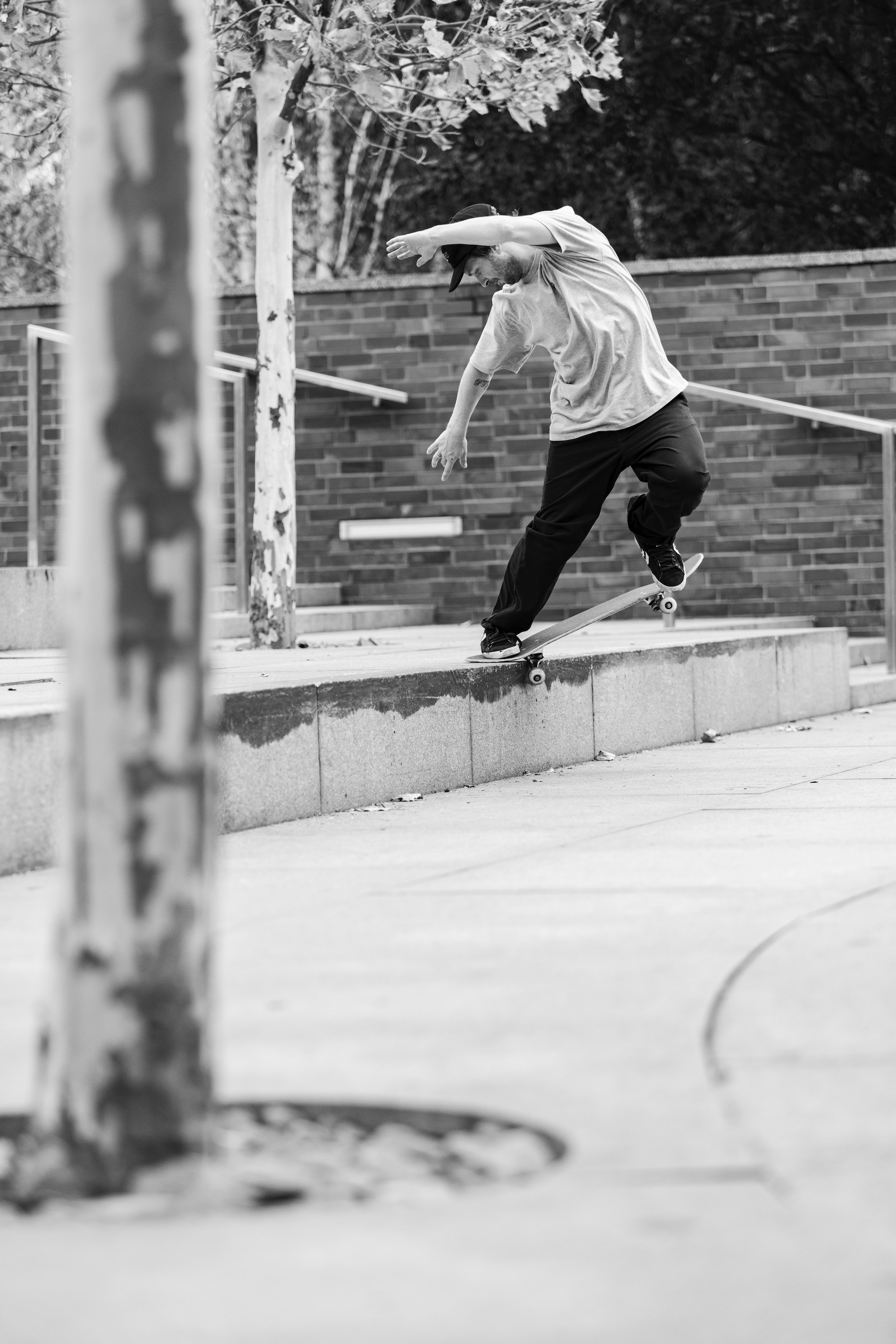
Ph: Jakub Skorupski
What is the main source of info for the Polish skate scene today?
Definitely social media, mostly clips and edits dropped on Instagram and YouTube. Everything’s super decentralized now; there’s no one big site that gathers all the news like back in the day.
That said, Barrier Magazine is a really cool exception. They post regularly online, but they also still print physical issues, which is pretty rare these days and helps keep that old-school mag vibe alive.
It’s also worth following the big Polish brands and skateshops, since they’re often the first to share news. And of course, local spot gossip will always be a thing. That never dies!
Warsaw is 300 kilometres from Katowice, what relationship is there between the skate scenes?
There’s a lot of mutual respect, but each scene has its own vibe- which makes sense, given the distance. Katowice and Warsaw are both strong scenes, but there’s plenty happening in Kraków, Wrocław, Poznań and other cities too.
Historically, Warsaw played a huge role because a lot of skate companies and magazines started there. What connects all of us is respect and a shared love for skateboarding. We always support each other’s events and projects because we all know we’re building something bigger together, a truly nationwide scene.
How would you compare skateboarding in Poland to your neighbouring countries?
I think we’ve got nothing to be shy about. Compared to our neighbours, especially the Czech Republic or Slovakia, the level in Poland is really high, especially when it comes to street skating. The women’s scene is strong too, and our infrastructure keeps getting better.
A lot of Polish skaters travel to contests or skate trips in Germany or the Czech Republic, so we’re definitely part of the wider European skate family. I’d say we’re right up there in the top tier of our region, both in terms of skill and dedication.
Opening bluntslide photo: Adam Lakomy