In deference to our Brazilian hosts for these WST São Paulo World Championships, we would like to begin our rolling coverage with a sweep through Brazil's profound effect on skateboarding worldwide over the last 35 years or more.
One thing which you may wonder, as you scroll through those taste-making Instagram accounts devoted to skateboarding nostalgia which feature slo-mo footage from 1990's Munster Masterships, is - where did the old idea that contests became somehow passé since then come from?
People with a vested interest in trying to shape culture in the direction of their sphere of influence within would have you believe that contests were somehow sicker back then, or that ‘real’ skateboarders have never seen the inside of a skatepark- but let’s dispel both of those porkies, double-quick.
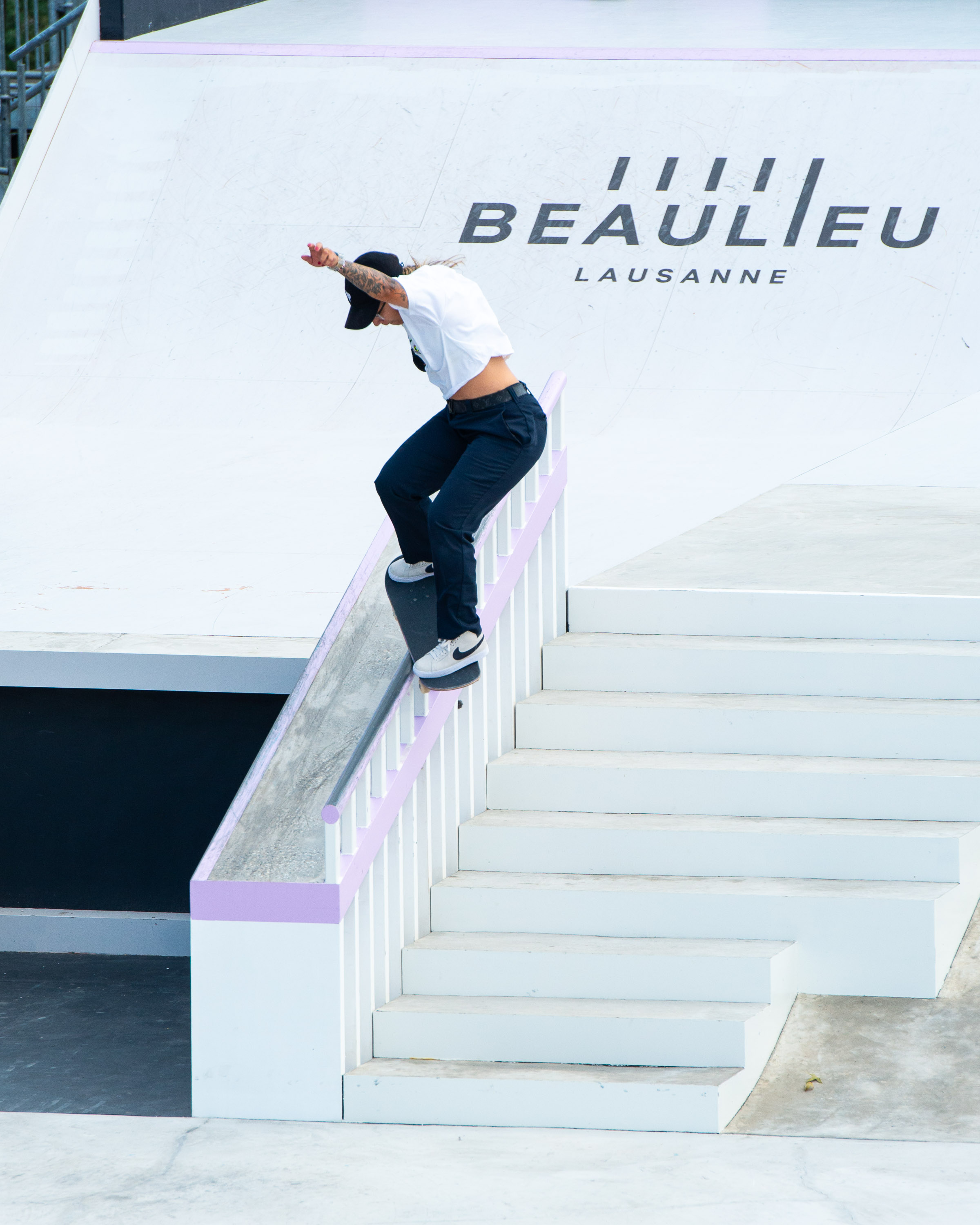
Pamela Rosa/ Ph: Darwen
First of all, if you don’t think many of those selfsame people, or their previous incarnations, were not- at that very time- already sneering at the school-disco quality of all youth gatherings, then I have some magic beans to sell you.
Secondly, legends are enshrined at events where everybody can see where everybody else is at.
Icons like Mike Carroll and Tom Penny owe part of their foundational lore to contests- Back To The City and Radlands respectively, in their cases.
The truth is- and we can measure this year-by-year like archaeological stratification- that as the 1990’s progressed into the 2000’s, the Brazilians began to dominate contests- and not just contests- without the permission of the skateboarding industry.
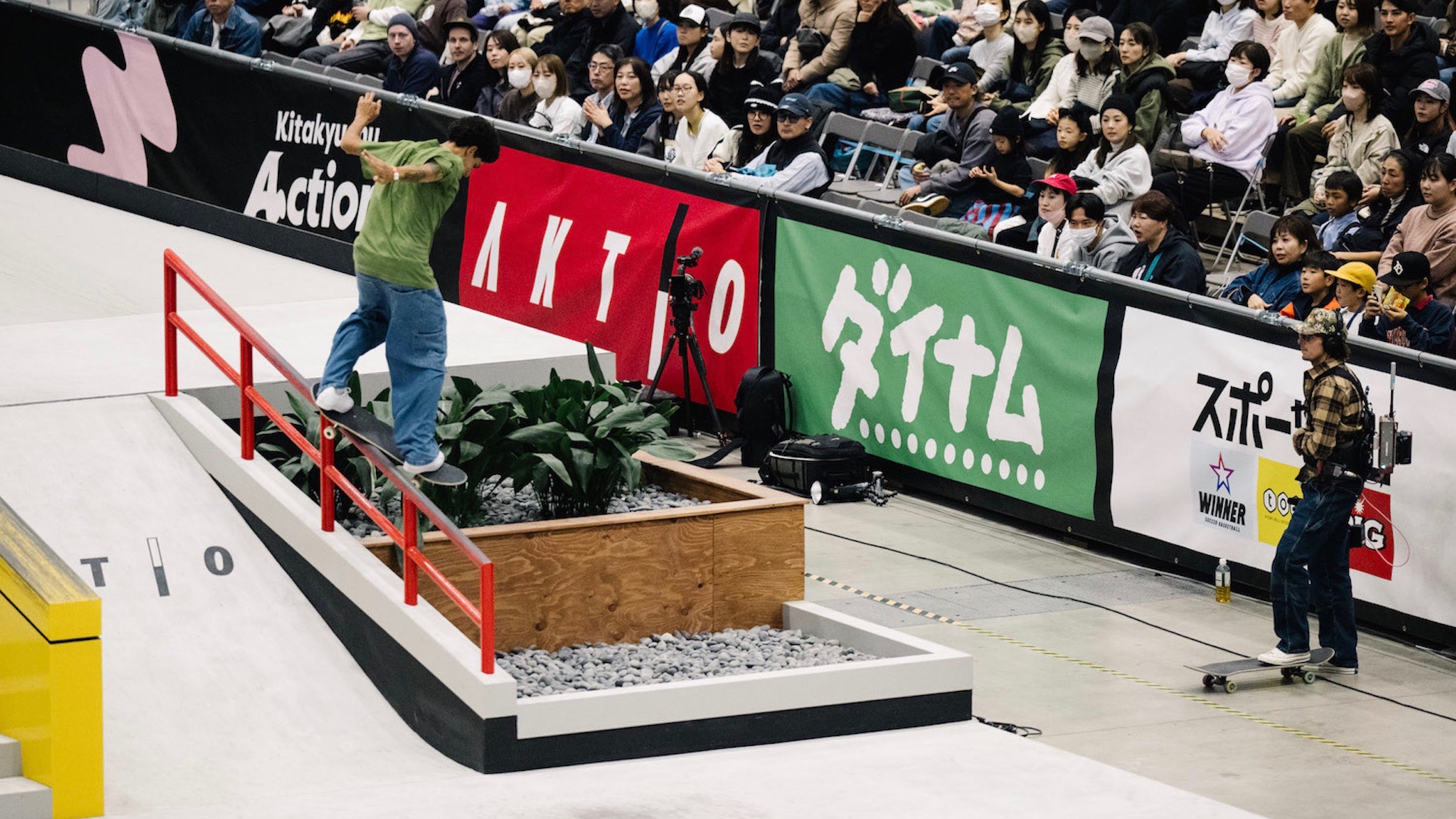
Filipe Mota/ Ph: Kenji
For the entirety of skateboarding’s short history up to that point, the USA- the country that gave the world youth culture- dominated skateboarding.
Certainly, during the 1980’s when Vert was still the big-tent offering, it was difficult if not impossible to make it meaningfully as a professional skateboarder without either emigrating wholesale or spending much of the year in California.
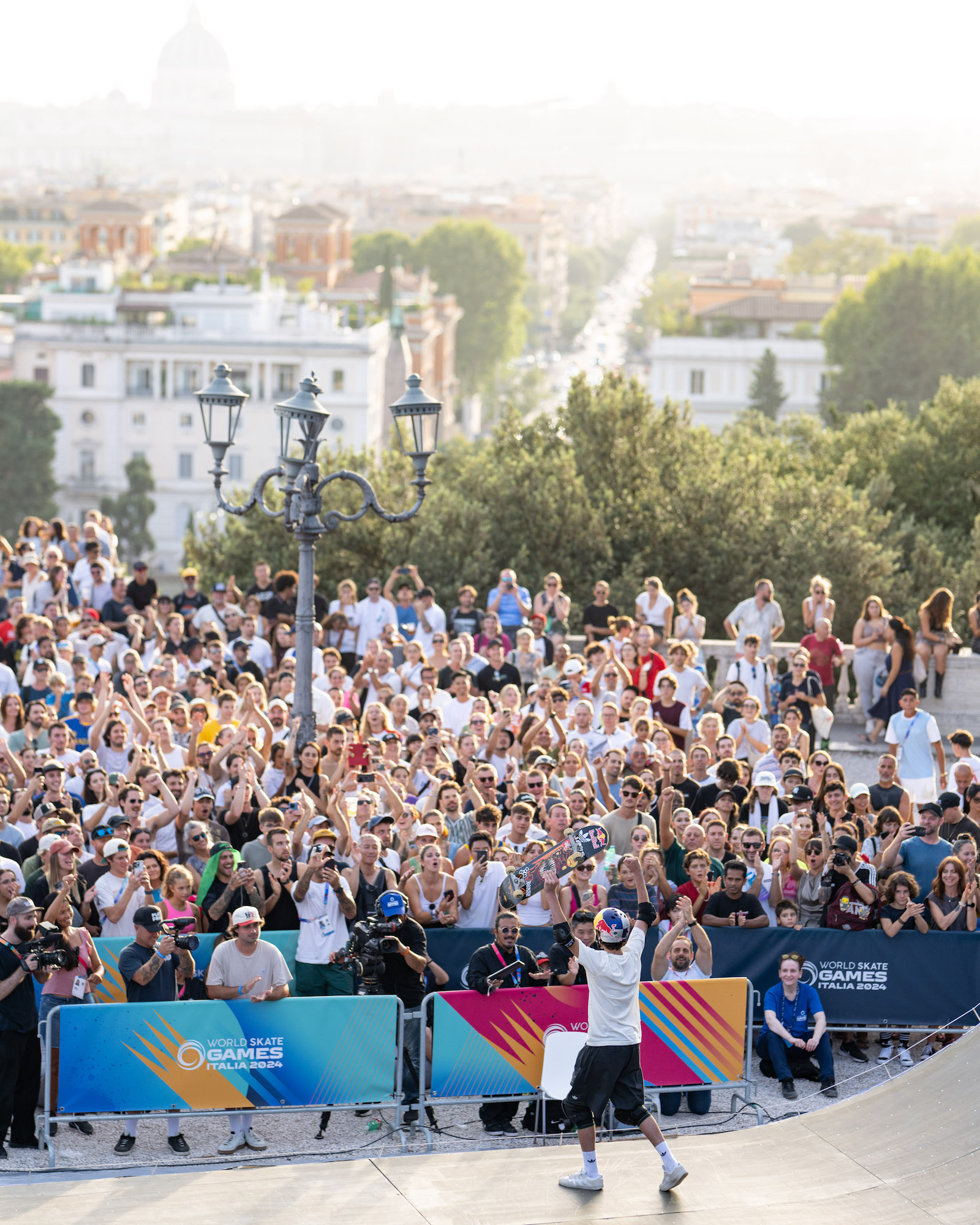
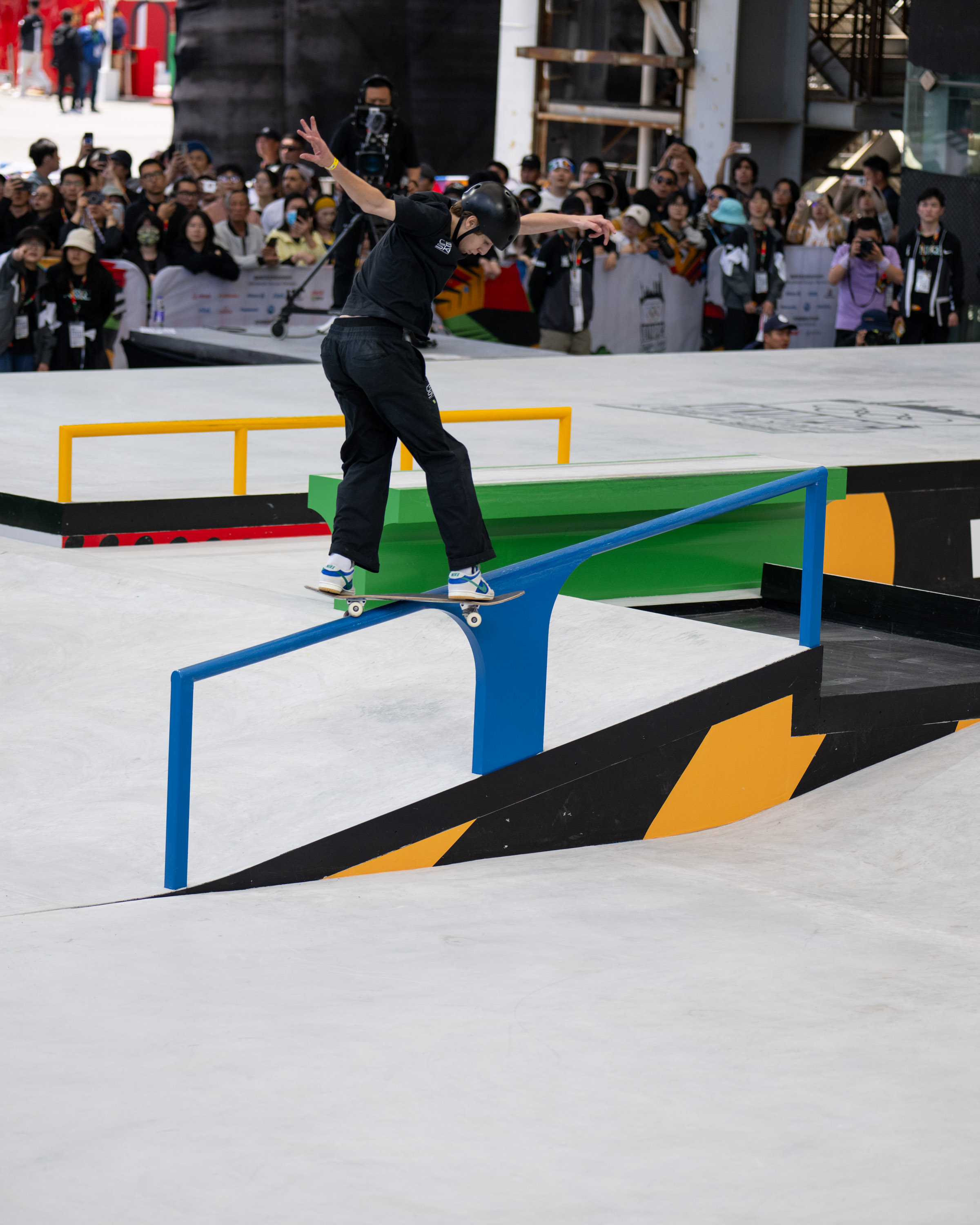
Gui Khury/ Ph: Kenji
What happened as the 1980’s gave way to the 1990’s was the European Summer Tour, where most brands who could afford it would send as many of their team as they could to demo/contest/demo/contest around a trail which would oftentimes take in Denmark down through the UK to the Netherlands, Czech Republic and inexorably towards Munster, Germany. Add Vancouver’s Slam City Jam and the Globe mega-contests in Australia, and you had a circuit.
Along the way, photos and footage would be gathered which would feed the media in the fallow seasons, and the cherry on top was that American pro’s could walk off with giant novelty cheques and bottles of cheap champagne for winning a couple of grand in a foreign currency along the way.
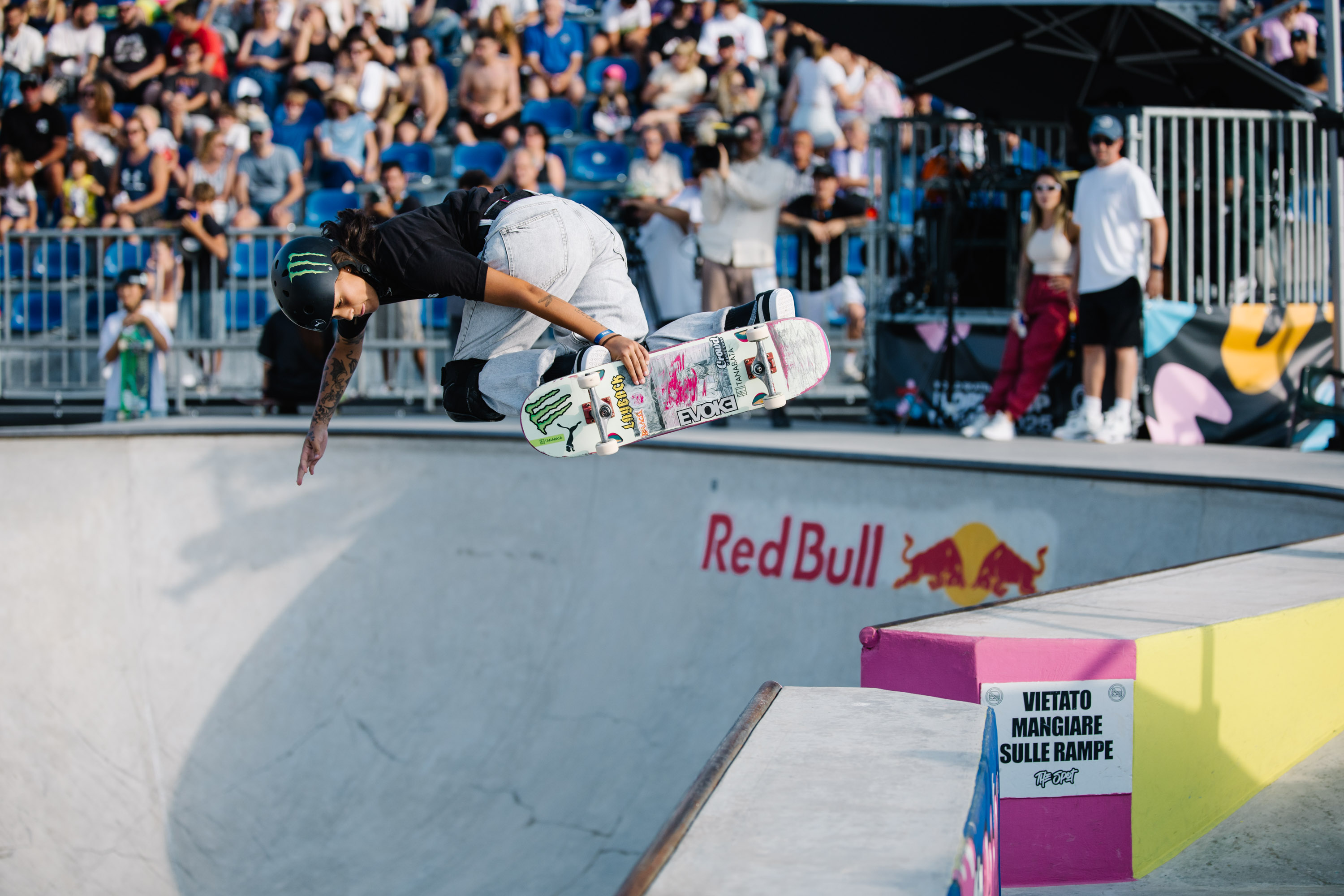
Isa Pacheco/ Ph: Kanights
Except nobody told the Brazilians. Brazilian skateboarding grew up on its own tangent not just because it established a nascent domestic skate industry- including media outlets such as Tribo and Cemporcento- due, in no small part, to the prohibitive cost of imports. Bear in mind that the internet was in its infancy at this point. There were these things called cybercafes… nevermind.
As early as 1989, the Brazilian impact was starting to be felt first in international contest skating: first in Vert, in the form of Lincoln Ueda and later Rodrigo ‘Digo’ Menezes and Bob Burnquist (who all but re-wrote the whole rulebook, there).
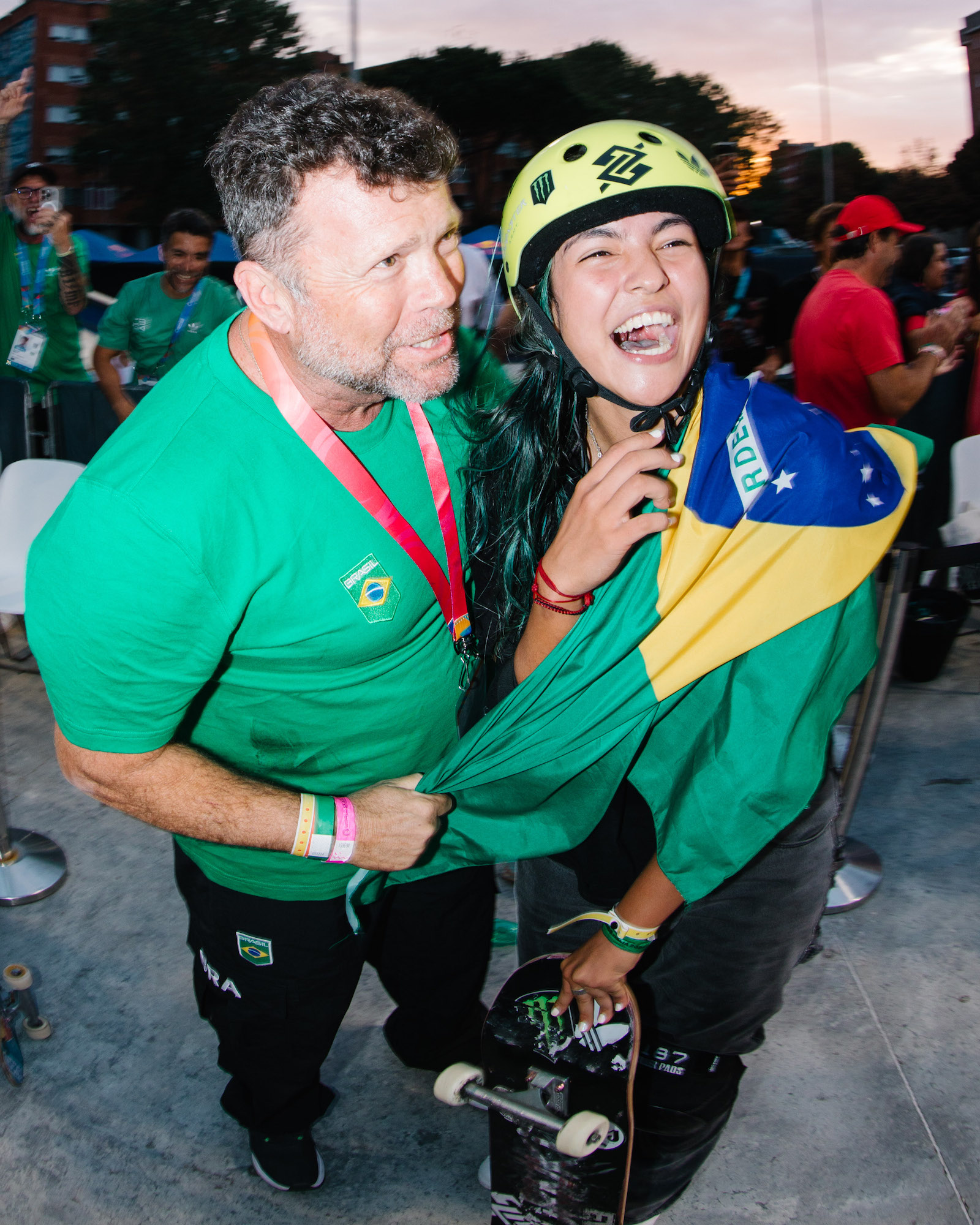
Raicca Ventura/ Ph: Kenji
But by the mid-90’s, something unstoppable was beginning in Street contests, too. What primed this mix for the inflection point was that those European contests were being run for the most part by distributors who wanted to do more than break even while providing a showcase. That meant they wanted to have as many paying entrants as possible- which is where the Brazilians came in.
The Brazilians created their own caravan. Selling boards from brands nobody had heard of outside venues, sleeping on floors and sharing food- they, as they always do- muddled through.
But they also had two separate fires burning underneath them. The first was that they never wanted their endless summer in Europe to end, so any money coming in was manna from heaven to keep the wheels turning. The second was that with hard currency up for grabs on the table and the rules of the game clear, they were happy to take out the heroes who people had come to see excel.
Carlos de Andrade winning Slam City Jam in 1996 seemed like a pivot point after which a dam was breached and the Brazilian onslaught began in earnest.
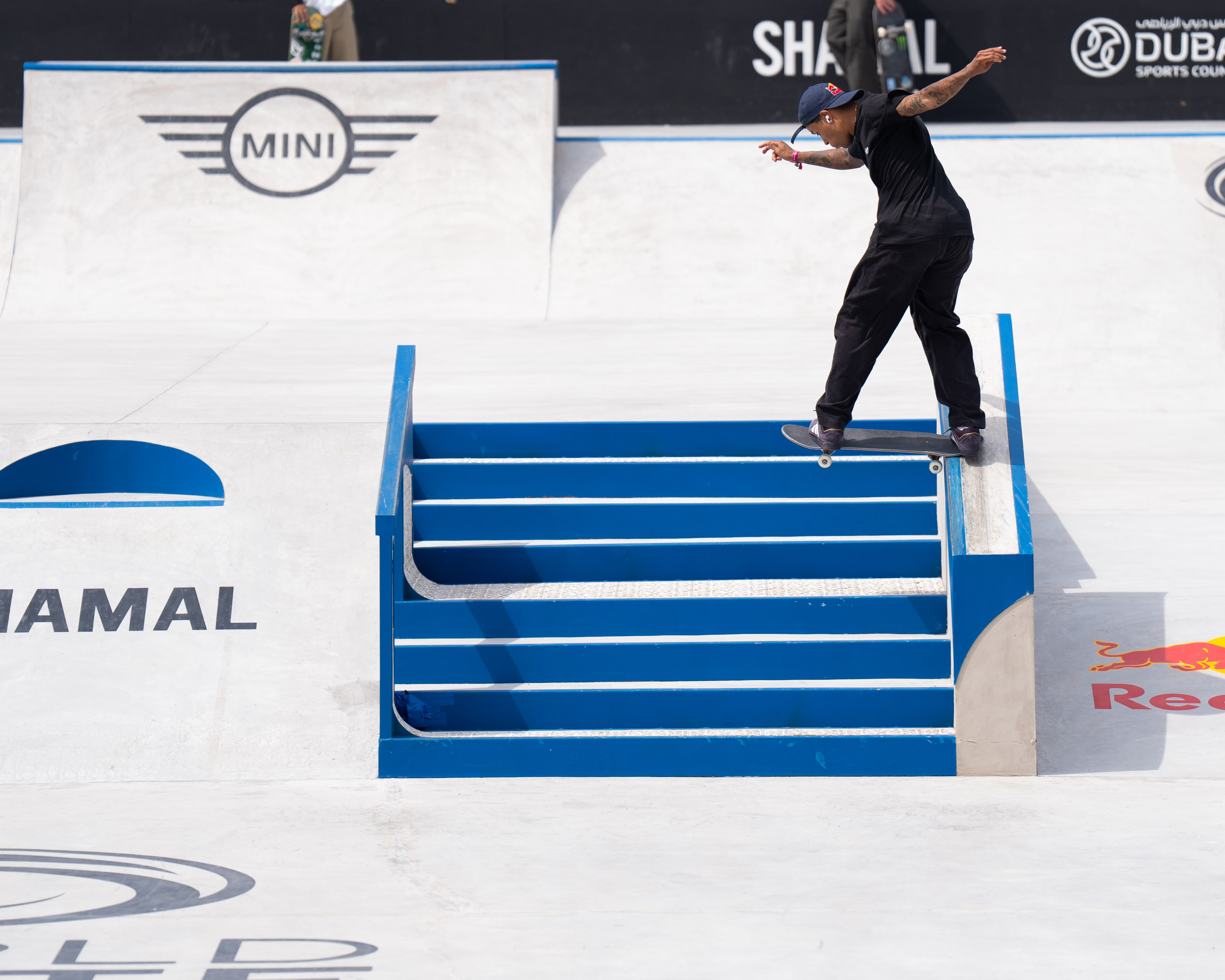
Felipe Gustavo/ Ph: Acosta
By the early 2000’s, Brazil was the first country to unapologetically train to win contests, and that upset the industry applecart because suddenly elite names with shoe deals were limping in sixth against ‘contest randoms’- which was the first, but not last, stick used to beat Brazilian contest skateboarding as a movement. Other countries had skatepark heroes like Austen Seaholm, but Brazil seemed to be manufacturing contest killers by the handful.
In quick succession Rodil Jr, Ricardo ‘Porva’ Oliveira and Daniel Vieira weighed into every open-format contest going- and, in real time, you could see established American professionals trying to avoid entering those same contests wherever possible.
Many of those pro’s with shoe contracts to renew would claim that it was because contests were ‘no longer fun’ and they would concentrate on filming instead (sound familiar?)- but the contests themselves had not changed; just the faces on the podiums.
It is notable to look back now on those 411 Video Magazine ‘Summer In Europe’ editions and see just how much footage Carlos de Andrade alone was logging in the course of a summer back then- two tricks to everybody else’s one. Ditto Alex Carolino.
It was a pivot point for competitive skateboarding, from which nothing in this part of skateboarding has remained the same, since.
You could argue it was the flowering of a democratic moment in skateboarding's attention economy, where industry unknowns could shake up the order- something we see, today, in Coco Yoshizawa’s Paris Olympic gold.
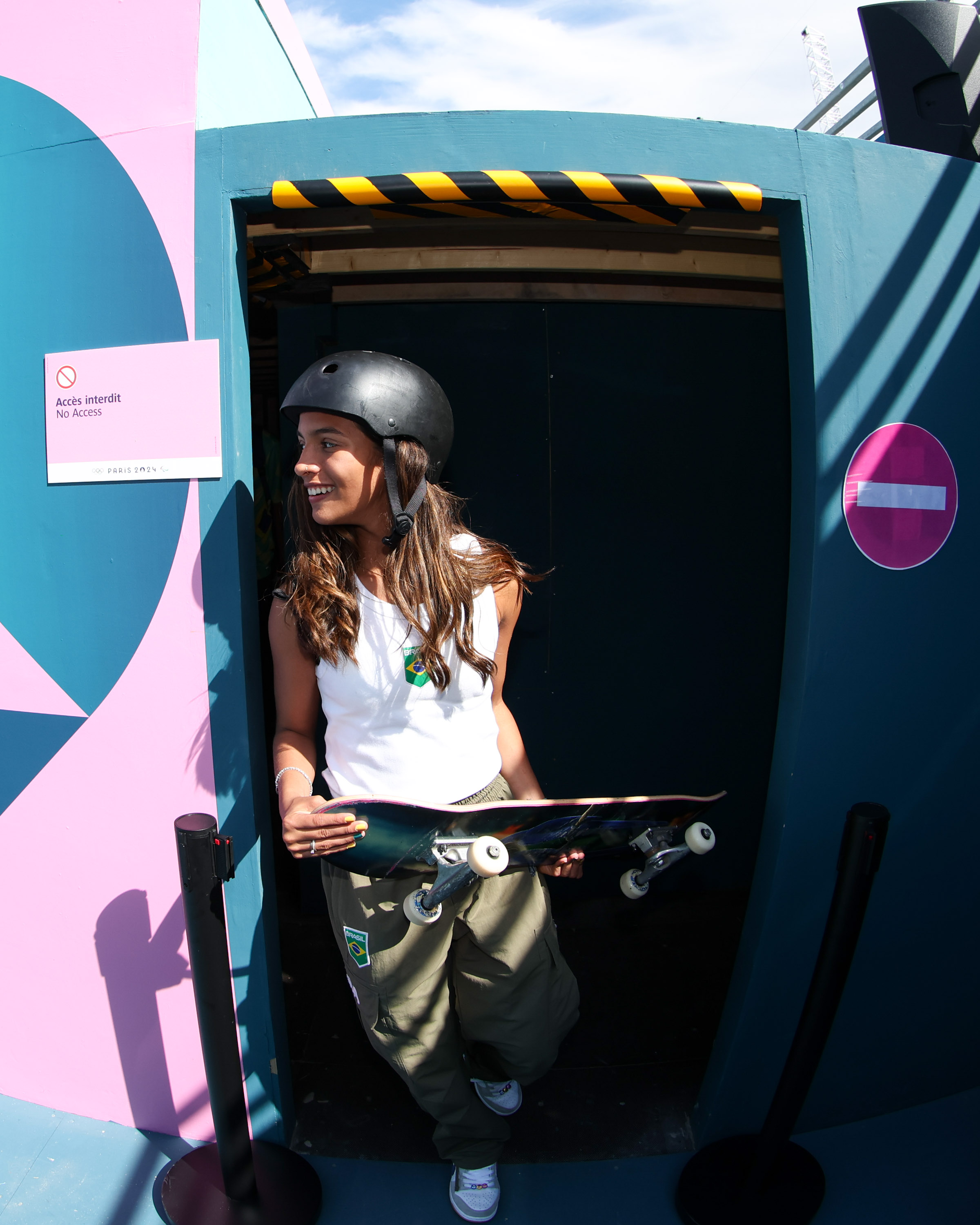
Rayssa Leal/ Ph: Atiba
Brazil would become if not the dominant force, then certainly the wellspring of contest talent for the first twenty years of the new millennium- prior to the current Asian flowering led, in no small way, by Japan.
Skateboarding, today, is more pluralistic and multi-faceted than it was back in the Limp Bizkit era: we have Brazil to thank for that.
They barged the doors open for the rest of the world.
Now, take a look at the nations represented in the top 16 of the World Skateboarding Ranking in every discipline, and reflect on what skateboarding owes Brazil.
Obrigado!