“But then you get out, and everybody's got a different face than you remember.
Maybe you do, too.
You pray for one face that didn't change.
One face that still knows you; looks at you the same way it always did."
- Carlito Brigante , Carlito's Way
Skateboarding in Europe has undergone a generational shift since the financial crisis of 2008.
Many of the faces and the brands and the spaces which defined the boom years are now gone- and what has emerged is certainly more pluralist, but also not as moneyed as it once was.
A lot of people who claimed- and probably believed- they would be skateboarders forever were washed away in the outgoing tide of that generational handover- but not Henning Braaten .
Although Carlito might be talking about the search for a bridge between eras upon getting out of jail in the quote from Brian De Palma 's superb 1993 film above, the same sentiment applies to the landscape of European skateboarding today.
Henning Braaten never changed. He was one of the nice guys then, and he's one of the nice guys now.
The Nordic countries always had a disproportionately high impact on the European skate scene, when you consider how little good weather they get. Henning provides a through-line between eras, first as a board-shattering presence around Barcelona and in videos from the Lordz/ Square/ Puzzle media/ brand nexus- and, more recently, as the coach of the Norwegian national skateboarding team which currently has nine skateboarders ranked on the World Skateboarding Tour.
We reached out to the Norse hammer thrower to get his perspective on how the game has changed within his lifetime, the radness of Jeff Kendall - and how you manage a skateboarding team in a country where winter sports are the national focus.
Photos: Tommy Solstad
Hey, Henning- how many trees do you think you have personally chomped in broken decks?
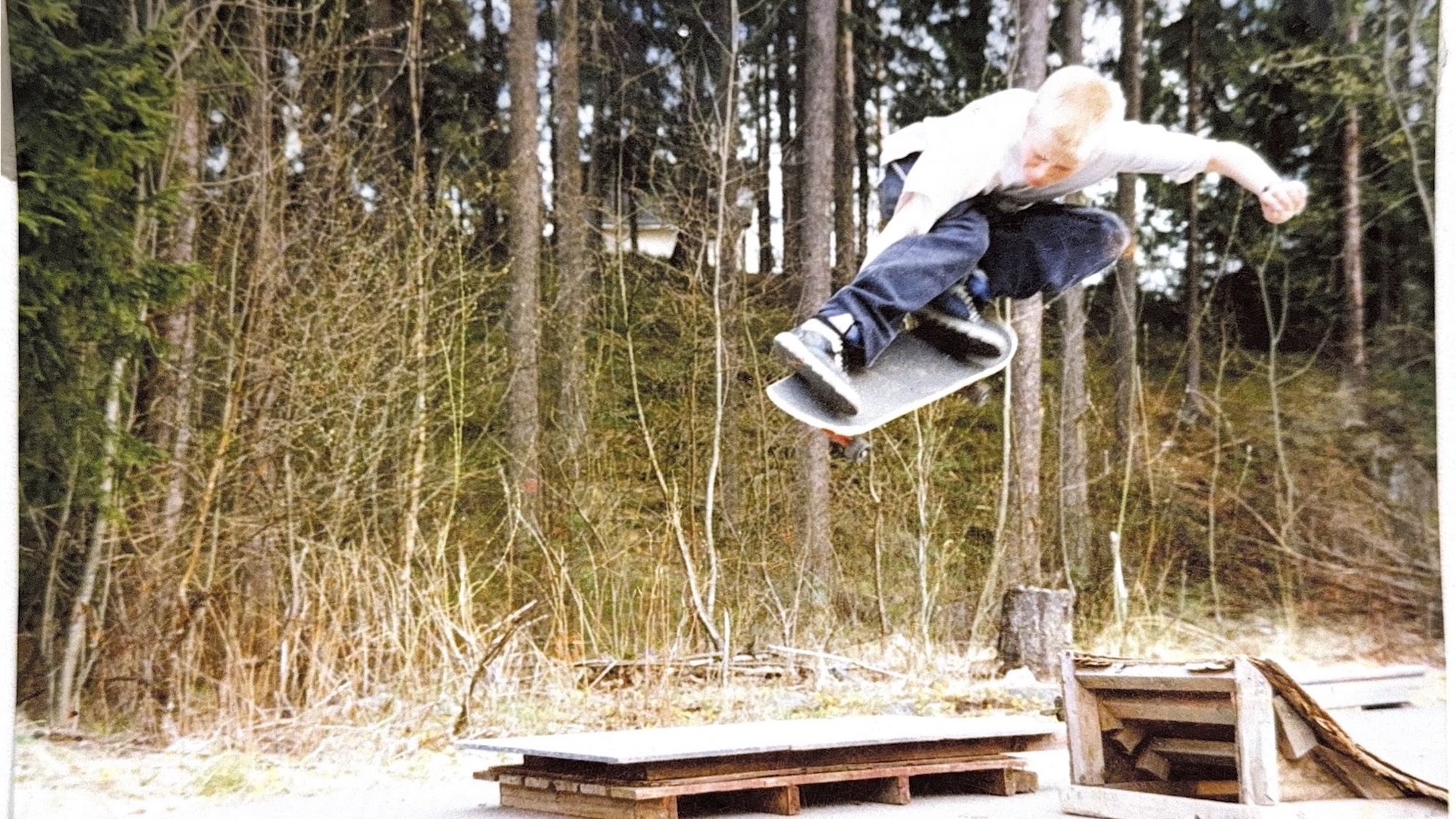
(Laughs) - that is a good question, I remember breaking a lot of boards when I started getting better and trying bigger stuff, but not landing bolts. I was devastated by the cost and did some really weird stuff just to be able to keep skating… I remember screwing in planks to put the board back together. I also had a deal with my next door older neighbor, when I had tidied his room five times he would give me one of his used decks. So, to answer your question- a lot!
The skateboarding landscape has changed a lot since your time as a sponsored skater- can you throw us back to that time? You were sponsored by big brands like DC, Nixon, Nokia…
A lot has definitely changed, and so much is still the same. I would say the biggest change is how fast and often we release material. The waiting on magazines and new videos is not like before- this used to be the highlight of the month… or year, even. And we would re-watch the videos so many times. This also made us put a lot of pride and time into what we put out. It seems different now, but at the same time I feel like full-length videos are making a comeback. Being sponsored in that time was quite cool and hectic: I feel it was a good time for the skate industry- we got to travel a whole lot, we always had great filmers and photographers around us. I was also lucky to be on teams with so many amazing legendary skaters- that alone pushed me so much.
I remember filming at Macba with Paco from Lordz/Square, and JB (Gillet) and Bastien (Salabanzi) were also at the spot. I just said a line I was really happy about for 'They Don't Give AF**k About Us'- then Paco's comment was 'You can't do anything better?' (laughs)…I've always remembered and loved that comment, and it was kind of an eye-opener, because yes - I could do something better: I could revert out, or a shove-it. That's what happens when you surround yourself with the best people.
Contest-wise, I feel it's a natural evolution; the top level is of course higher, but at the same time if you had put skaters like Rick McCrank , Bastien (Salabanzi) and (Mark) Appleyard in their first in a contest today, I still believe they would do really well. Another thing, there, is how differently it evolved than what I expected- skating huge stairs, banks and pyramids in the early 2000's, I believed that stuff would be bigger- but the opposite happened. Maybe for the best regarding the health for the riders, but I kind of miss the huge pyramid tricks, and more creative park designs.
We recently interviewed Chany Jeanguenin , who you were on Expedition 1 with- do you have any favorite memories from that connection?
To me, meeting Chany was really cool. His part in Genesis is one of my favorite parts ever- I really like his trick selection and style.
Getting hooked up with E1 was sick- Stephane Larance hooked it up.
We had a really cool trip to Rotterdam, skating together with Michael Sommer and Ricardo Paterno . We also met up in Cali, at Kayo. It didn't last long, but it was another box checked off in terms of really cool places and connections skateboarding has given me. And it's so cool meeting him and other people from those years at the coaches stand, now. I really think this is great for skateboarding, all these people who put their heart and soul into their skateboarding are now continuing and spreading that spirit to the next generation.
You also traveled a lot with the Lordz/ Square guys early in your career: their Puzzle Video Magazine did quite a comprehensive job of covering Europe on limited budgets, right?
Yes, that was kind of a breakthrough for me. Their Norwegian distributor organized for me to meet up with them in Paris after the European Championship in Basel one year. I traveled alone, and didn't know any of the guys. Thomas Paulin introduced me, and we filmed like crazy for a few days and made a part for their segment 'One Week'.
I don't think I've ever skated better in my life than that week: the crew, the spots and the opportunity was too good to miss out on. It got me friends for life- and a career, basically!
We just had a reunion in Barca- revisiting spots, showing the video at a bar… and breaking my arm. It was great!
You said in an interview with Kingpin Magazine back in 2009 that you were happier to be around and involved in Norway rather than to try and go 'make it' in the US. No regrets, there?
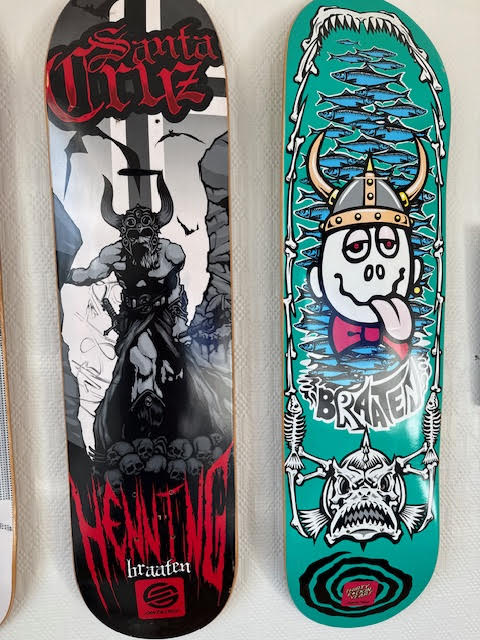
Yes, but at that time I had- in my own eyes, coming from the woods in Norway- done it 'all'… and my first son was one year old. It was time for a new era in my life. Since I was sixteen, I had traveled abroad to skate, and I think I got a lot out of my level. I lived full-time pretty OK as a pro skateboarder for ten years, I had a couple of pro models on my childhood dream company Santa Cruz, signature wheels for Square, and a colourway with DC. I made the finals in the World Champs, won a bunch of contests, I had parts and interviews. And I was never what some people call talented- I just did the stuff that needed to be done, and I truly intensely loved skateboarding. Still do!
But at that point, I felt my level was not the level of the pros; I was kind of tired of being on the road, and I wanted to be there for my son. Absolutely no regrets, I actually got quite a boost in my skating shortly after. No pressure, just skating a lot at home with close friends. I feel some of my best parts are from that era. I managed to keep some of my sponsors and at the same time got a part-time job managing the teams of DC and Element for their Norwegian distributor. It was a great transfer into adulthood (laughs).
You also spent a long time filming in Barcelona during what might be considered the 'glory years' - what was your experience of the city in that era?
My first winters as an aspiring full-time skateboarder were spent in Cali, but after a few years in the late '90s there, the focus shifted to Barca. We were a big crew of friends from home and other countries who wanted to escape the winters, so every year (filmer) Jørgen Johannessen and myself rented an apartment for a couple months and just skated and filmed like crazy everyday. Those days were sick! You would see and skate with all the best skaters in the world daily, pushing it on amazing spots, and meeting them nightly at Bar Manolo (laughs). Good thing we were young at the time- wouldn't last 24 hours with that program, now.
We had extremely good use of the metro system, every stop was linked to a spot almost, and we would go on quests from the end stops and cruising back to the city, skating whatever. Coming from Norway it was just surreal.
Do you feel like the Nordic nations are at a distinct disadvantage when it comes to skating opportunities because good weather is a short window?
One thing you learn when coming from a place like this is to appreciate the good days and take advantage of the fullest. I actually think it's a positive thing. Don't waste your time. As a kid, there was some years we didn't have an indoor park- but we still skated. There was a local gas station which had a roof that we used to skate under. You just had to plow your way half an hour though snow to skate in -10c. We also skated a lot of parking garages- it was like a game with the security guards, we went from one garage to the other and back, skating fifteen minutes here and there. But I remember it as the best of times; the smell of a garage still makes me want to skate!
We asked Jussi Korhonen over in Finland this question too: is it time for nations who face similar training problems to consider shared camps somewhere?
Absolutely, skating together is always the best. Now all the Nordic countries have pretty good indoor facilities, so we should definitely skate more together across borders.
Norway has a respectably big team considering your country's primary sporting focus being on winter- has it been challenging for you guys to argue the case for investment in an activity which requires dry space?
Coming into the federation part of skateboarding in 2016 and up to now I would say, one of my main focus points has been telling the NOC about our sport and culture, and the bigger picture of skateboarding in the society. It's hard at first, since we are from the number one winter sports nation in the world, no less- and I think all summer sports here have to fight a little extra to get funding and attention. Luckily, I've met so much positive feedback and we have been slowly building our structure since. The team is located at different cities and they all have good indoor parks, so it's not really a problem for us. We could always wish for more, but it is up to us to make the most of it.
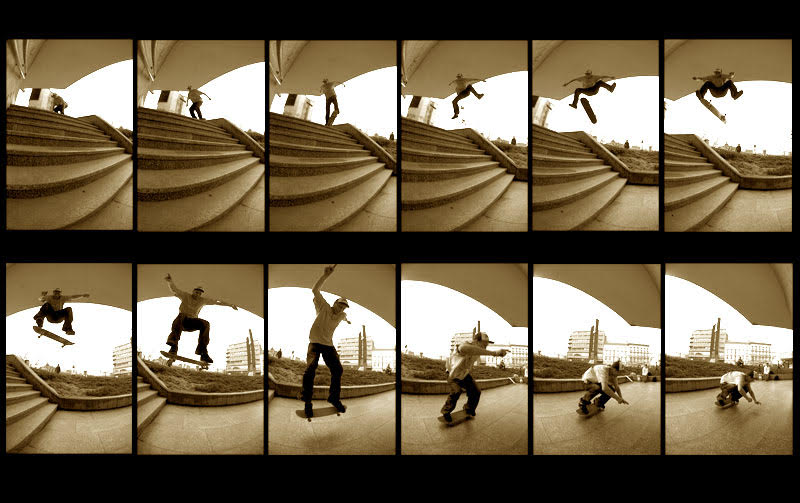
Has the Oslo Skatehall been a success?
Oh yes! It has done a lot for recruiting new skaters and is a fantastic meeting place for the community.
I know you have told this story before, but for those who don't know much about your history- you could have been a decorated cross-country skier. Is it called Telemark skiing? Can you explain what it involves and how good you are at it? I know you are modest, but you were top-level at some point, I believe?
(Laughs) We have a saying that Norwegians are born with their skis on. Growing up, I used to do cross-country skiing all the time. It's not only a sport, but a mode of transport and a big part of the culture. I was Oslo champion at an early age and had started dreaming of bigger things. I loved the nature part, the technique and the playfulness- but, as in many sports we make it too serious early on and destroy the joy, so my results went down and my love for skateboarding grew. Having that experience has made skateboarding joy the most important points in my coaching philosophy.
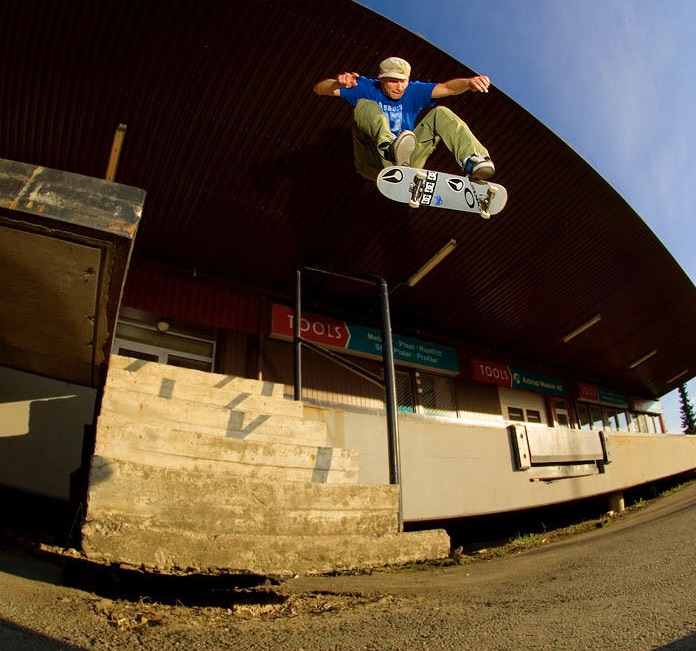
What do the people need to know about what is coming out of Norway skateboarding-wise next? Any secret weapons coming through?
There are so many good things coming, trying to support creative, stylish, joyful skateboarding and from that base help the next generation find their place and make a mark.
How was it riding for Jeff Kendall in your Santa Cruz years? Best guy ever?
Having grown up watching Wheels Of Fire, just seeing Jeff Kendall in your email inbox is crazy! I have to tell this story: when I was 10, Natas Kaupas came to Norway on a huge demo tour. I was the biggest fan of Santa Cruz and SMA, I even had my own pretend pro profile in my sketchbook (laughs). I went there with my Natas board to get it signed and meet my hugely influential hero. I was so nervous but managed to make my way through the crowd on top of the mini-ramp and poked him and asked him to sign my board. He barely noticed me and just dropped in instead. I was devastated! But he was still my hero.
So then, seventeen years later I was in Santa Cruz to pick up my first proper pro model; I went in to the warehouse and to my surprise, there's Natas signing his reissue pro models! I walk up to him with my own new model and tell him the story from 1990- he laughs and signs my board.
At that moment, I was like 'This is such a fulfillment, I can just retire.'
Thanks for the interview, Henning - anyone we can shout-out to on your behalf?
My sons Aksel and Peder , my family, girlfriend and friends, and everyone else who keeps up with me.
I want to thank our federation for letting me have a job that I honestly can say is a dream job. The riders that I work with also deserve a shout out- what a great crew!
A special thanks to my childhood hero and neighbor Roar Mikalsen for introducing me to skateboarding, to Jørgen Johannessen for patiently filming my lines for thirty years (so far), to Jørn Marki for making it happen with DC, to Lasse Andersen for the Oakley years, Benoit Copin for making me part-French and Stefan Johansson for hooking it up with adidas.